How to Prove Financial Hardship to the IRS
This is a subtitle for your new post

When an attorney or tax preparer refers a client who "can't afford to pay" the IRS, the first question I ask is whether anyone has documented what that actually means in terms the IRS will accept. Good intentions aren't enough. The IRS has a specific standard for economic hardship, a specific form to support it, and a specific process for deciding whether to suspend collection. Clients who approach this without meeting that standard get denied — or worse, get an installment agreement they can't afford.
Here's what proving financial hardship to the IRS actually requires.
The IRS definition of hardship
Under IRM 5.16.1.2.9, a hardship exists when a taxpayer is unable to pay reasonable basic living expenses. The basis for a hardship determination is the taxpayer's financial condition as reported on Form 433-A (for individuals and self-employed) or Form 433-B (for businesses). These cases generally involve no income or assets, no equity in assets, or income insufficient to make any payment without causing hardship. An account should not be reported CNC if the taxpayer has income or equity in assets and enforced collection of that income or equity would not itself cause hardship. irs
That last sentence is the one that trips people up. The question isn't just whether the client is struggling — it's whether paying the IRS would leave them unable to meet necessary living expenses. Those are different tests.
The form that carries the case
The hardship determination rides on the Collection Information Statement. For individuals and sole proprietors, that's Form 433-A. For operating businesses, it's Form 433-B. The CIS is not a narrative — it's a structured financial disclosure covering income, expenses, assets, and liabilities. Every number on it will be cross-checked.
The IRS requires that the CIS supporting a CNC determination be current — meaning less than twelve months old. A CIS is not required before reporting an account CNC only when certain specific conditions exist, including terminal illness, incarceration, Social Security or welfare as the sole income source, or unemployment with no income — and only when the aggregate unpaid balance is below a threshold amount. irs
For any client with a meaningful balance, assume a full CIS is required. Shortcuts here typically result in denial or a delay that lets the collection clock keep running.
How the IRS measures "necessary" expenses
The IRS doesn't take the taxpayer's word for what their expenses are. Allowable Living Expense standards — also called Collection Financial Standards — are guidelines the IRS uses to provide consistency in certain expense allowances, including food, household expenses, medical costs, housing, and transportation. These standards have national and local components. Internal Revenue Service
The necessary expense test is the standard expenses must meet: they must be necessary to provide for a taxpayer's health and welfare and/or production of income. National standards have been established for minimum out-of-pocket health care allowances, and taxpayers are allowed the standard amount on a per-person basis without having to document actual spending. For housing and utilities and transportation, local standards apply and vary by location — in most cases the taxpayer is allowed the lesser of the amount actually spent or the local standard. Internal Revenue Service
In practice, this means a client in Gainesville with $2,800 in monthly rent can't claim that entire amount as an allowable expense if the local standard for their household size is $1,600. The excess is disallowed, increasing their calculated ability to pay — and potentially disqualifying them from CNC status.
The IRS may allow additional amounts above the standards if the taxpayer substantiates the need to deviate from them. But substantiation is required — the client has to produce documentation, not just assert that their situation is different. Taxpayer Advocate Service
What the IRS verifies
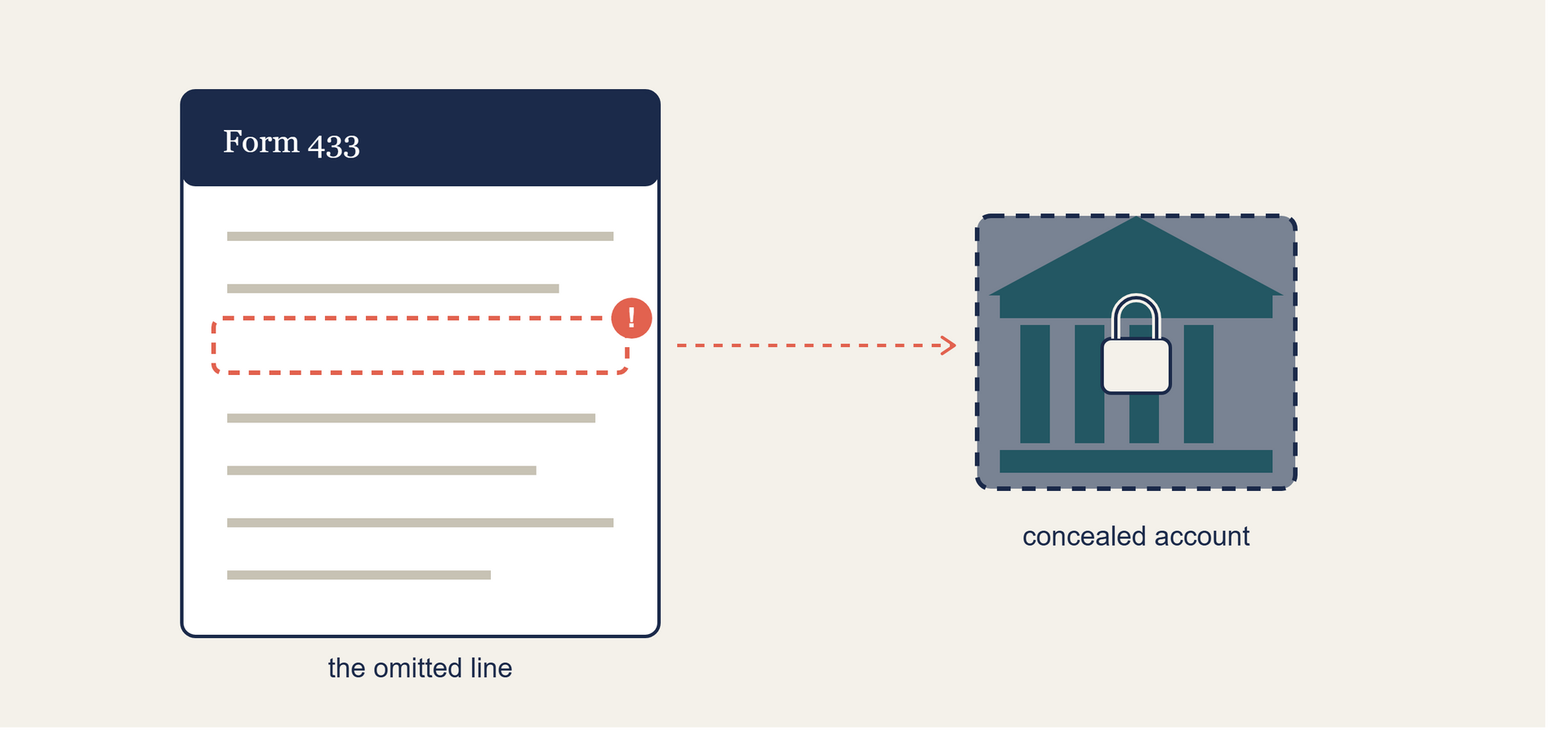
The level of verification required scales with the balance. For accounts above certain thresholds, the IRS requires motor vehicle records, courthouse records for real and personal property, and for higher balances, a full credit report on individual and sole proprietor taxpayers. Income reported on the CIS may be verified using IRS transcripts — the IRS can pull third-party income reports and return data independently, without asking the taxpayer. irs
This is why a poorly prepared CIS creates problems. If the income or assets disclosed on the form don't match what the IRS finds in its own systems, the examiner will flag the discrepancy and require an explanation before proceeding. In some cases it results in an outright rejection.
The NFTL issue
Proving hardship and getting CNC status doesn't mean the IRS walks away entirely. In general, a Notice of Federal Tax Lien should be filed on accounts being reported CNC when the aggregate unpaid balance equals or exceeds $10,000. The lien remains in place even after the account is placed in CNC status. irs
Clients — and the attorneys advising them — need to understand that CNC status suspends enforced collection activity, not the underlying liability. Interest and penalties continue to accrue. The lien stays. The IRS will advise taxpayers that interest and penalties continue even though collection action is suspended, and other collection options such as an Offer in Compromise should be discussed before reporting an account CNC. irs
Hardship CNC is not permanent
Hardship cases are monitored. The IRS reviews total positive income annually when a taxpayer files an income tax return. If income increases above a level tied to the hardship closing code under which the account was closed, the account can be reactivated for collection. The closing code itself is selected based on the taxpayer's total allowed living expenses — and the IRS uses that code to set the income threshold that would trigger reactivation. irs
For clients with fluctuating income — seasonal workers, freelancers, business owners — this means CNC status can be temporary. That's not necessarily a problem, but it has to be managed. If the client's situation improves and the IRS reactivates the case before a representative is engaged, the window to negotiate from a position of hardship may close.
The referral decision
Financial hardship representation requires knowing the ALE standards for the client's location, understanding how to present income and expenses in a way that withstands IRS scrutiny, and anticipating the verification steps the IRS will run before approving CNC status. It also requires making a judgment call about whether CNC is actually the right resolution — or whether a Partial Pay Installment Agreement or Offer in Compromise better serves the client's long-term interests.
If you have a client who appears to qualify for hardship relief, I'm glad to evaluate the situation and advise on the appropriate path. I can be reached at (352) 317-5692 or through taxrepgainesville.com.

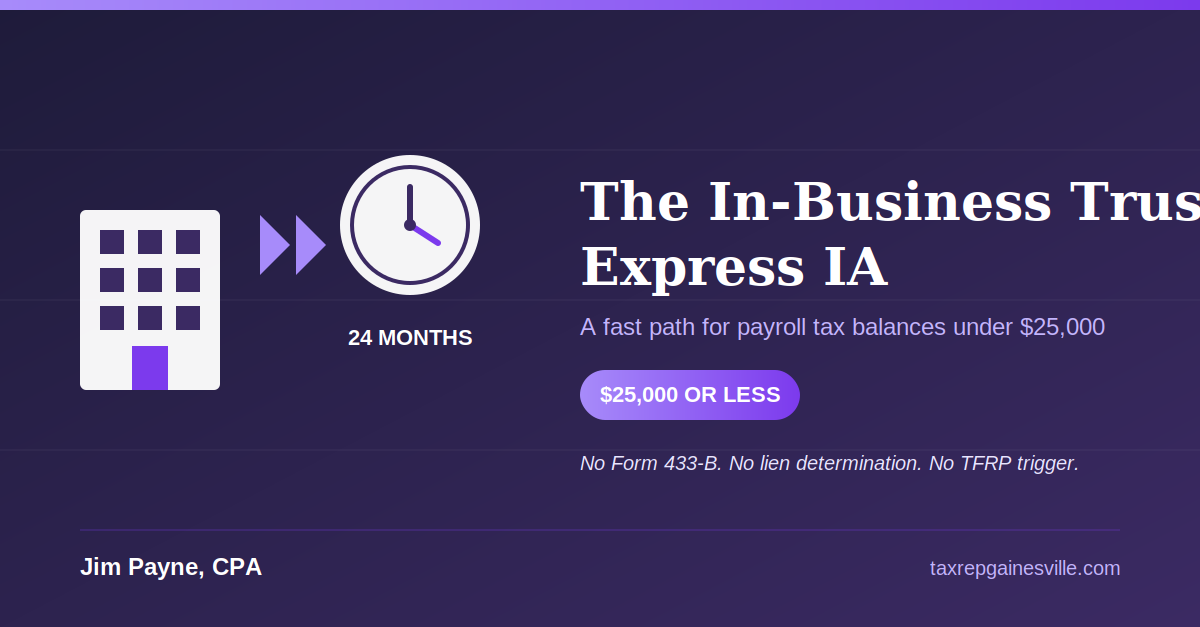
The In-Business Trust Fund Express Installment Agreement: A Fast Path for Small Payroll Tax Balances