Releasing a Business Bank Levy: What IRC 6343 Actually Offers
This is a subtitle for your new post

A frozen operating account is the call that comes in at the worst possible moment — payroll is due, a supplier needs paying, and the funds are sitting with the bank instead of the business. IRM 5.11.2.3 governs when the IRS must release that money, and the release grounds work differently for a business than for an individual wage earner.
Six Grounds, Written With an Individual in Mind
IRC 6343(a)(1), implemented at IRM 5.11.2.3.1, lists the circumstances requiring release: the liability is satisfied or the statute expired, release facilitates collection, an installment agreement is in place, the levy causes economic hardship, or the property's fair market value exceeds what's owed. The economic hardship ground is the one most people reach for first — and it's the one that doesn't map cleanly onto a corporate account. IRM 5.11.2.3.1.4(1) defines it as a levy that will cause "the individual" to be unable to pay reasonable necessary living expenses. That's a personal-finances standard, not an operating-expenses standard. A corporation or LLC doesn't have living expenses, and the case-closing instruction at IRM 5.11.2.3.1.4(6) — release all open levies when a case closes as hardship CNC under IRM 5.16.1.2.9 — points to the same individual-CNC provision, not the business closing code.
That doesn't mean a business levy release argument is weaker. It means the argument runs through a different ground.
The Ground That Actually Fits: Facilitate Collection
IRC 6343(a)(1)(B), at IRM 5.11.2.3.1.3, requires release when doing so will facilitate collection of what's owed — and this ground isn't limited to individuals. The IRM's own example is instructive: a levy on a broker holding a client's cash and stock options is released so the taxpayer can exercise options worth more than the liability, and a new levy immediately attaches to the higher proceeds. For a business, the version of this argument is usually payroll- or receivables-based: releasing the frozen funds now lets the business meet payroll, keep operating, and generate the revenue that actually pays the liability — where leaving the levy in place risks the business closing and the debt going uncollectible. This is a collectibility argument, and it has to be built the same way an OIC or PPIA case is built — with financial documentation showing the release increases, not decreases, what the government ultimately gets.
The Installment Agreement Ground Moves Faster
IRC 6343(a)(1)(C), at IRM 5.11.2.3.1.6, requires release once the IRS enters an installment agreement with the taxpayer, unless the agreement itself provides that the levy continues. For a business with an existing IA already in good standing, or one that can be put in place quickly, this is often the fastest and cleanest path to release — it doesn't require building a hardship or facilitation case at all, just getting the agreement executed.
The Clock That Actually Matters: 21 Days
IRC 6332(c) requires a bank to hold levied funds for 21 calendar days before remitting them to the IRS — the window referenced directly in IRM 5.11.2.2.3(3). That 21-day hold is the real deadline for a business bank levy, not any deadline tied to the release grounds themselves. IRM 5.11.2.3.1(2) directs IRS personnel to release a levy as soon as a qualifying condition is identified specifically to prevent payment from going out before the release posts — which means a release request that lands with the revenue officer in week one has a real chance of stopping the transfer, while one that lands after the 21 days run is chasing money the bank has already sent.
If the Release Is Denied
IRM 5.11.2.3.1.4(7) confirms that when the IRS determines a full or partial hardship release isn't warranted, the taxpayer can appeal through the Collection Appeals Program under IRM 5.1.9. A denial on the levy release isn't the end of the conversation — CAP is available specifically for this kind of collection action dispute, and it moves faster than a full CDP process.
Why This Matters for Referral Sources
When a business client's account gets levied, the instinct is often to frame the request around hardship because that's the term clients use themselves — "this is going to put us out of business." The stronger, more accurate argument for an operating business is usually facilitating collection or an installment agreement, not hardship in the IRC 6343(a)(1)(D) sense, and building the wrong argument costs time the 21-day window doesn't allow.
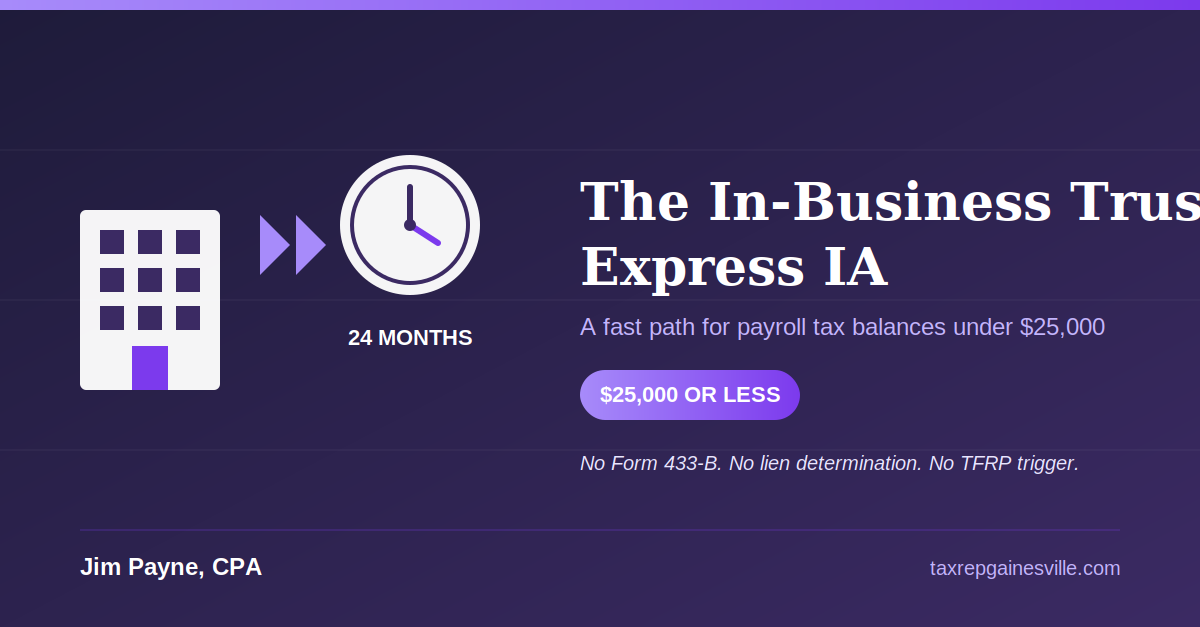
The In-Business Trust Fund Express Installment Agreement: A Fast Path for Small Payroll Tax Balances