Strategy Ideas When Working With Reasonable Collection Potential (RCP)
This is a subtitle for your new post

Reasonable Collection Potential (RCP) is the backbone of most IRS collection resolutions, especially Offers in Compromise. It represents what the IRS believes it can collect from you through enforced collection, either now or over time. Because RCP is formula-driven, many taxpayers assume it’s fixed. It isn’t.
With the right planning and timing, RCP can often be managed, reduced, or presented more favorably, which can dramatically change the outcome of an Offer in Compromise or payment negotiation.
Here are practical strategy ideas to keep in mind when working with RCP.
- Understand That RCP Is a Snapshot, Not a Lifetime Judgment
The IRS calculates RCP based on your current financial condition at the time of review. That means income, expenses, assets, and even recent transactions all matter in the moment.
One of the biggest mistakes taxpayers make is rushing into an Offer in Compromise without considering whether their financial snapshot is at its worst or best. Strategic timing alone can materially reduce RCP.
2. Manage Cash Carefully Before Filing
Cash is one of the most heavily weighted components of RCP. Large bank balances are usually counted dollar-for-dollar.
Strategic considerations include:
- Paying necessary living expenses before filing
- Addressing overdue bills or legitimate obligations
- Avoiding unnecessary accumulation of cash immediately before submission
This is not about hiding money — it’s about understanding how cash on hand is viewed and ensuring it reflects normal, reasonable financial behavior.
3. Know Which Expenses Matter — and Which Don’t
Not all expenses reduce RCP. The IRS relies heavily on allowable expense standards, but there is room for discretion when expenses are necessary and well-documented.
Strategies include:
- Documenting medical, dependent care, or special circumstances
- Ensuring expenses are consistent and recurring
- Avoiding inflated or discretionary expenses that won’t be allowed anyway
Well-supported expenses can meaningfully lower monthly disposable income, which directly reduces RCP.
4. Plan Around Asset Treatment and Dissipated Assets
Assets are included in RCP at their net realizable value, not their replacement cost or emotional value.
Strategic planning involves:
- Understanding how equity is calculated
- Timing asset sales carefully
- Avoiding transactions that could be viewed as dissipated assets within the IRS lookback period
Poor asset decisions shortly before filing can increase RCP even if the asset is gone.
5. Use Future Income Rules to Your Advantage
Future income is often the largest part of RCP. The IRS typically multiplies monthly disposable income by a set number of months depending on the payment option.
Strategies may include:
- Filing when income is temporarily lower
- Demonstrating instability or volatility in income
- Choosing payment options that reduce the future income multiplier
Small differences in monthly income can translate into large changes in total RCP.
Final Thoughts
RCP is not just a number — it’s a framework. Taxpayers who understand how it’s calculated, when it’s measured, and what factors influence it are in a much better position to negotiate with the IRS.
Whether you’re considering an Offer in Compromise, installment agreement, or another resolution option, thoughtful planning around RCP can mean the difference between a rejected offer and a successful resolution.

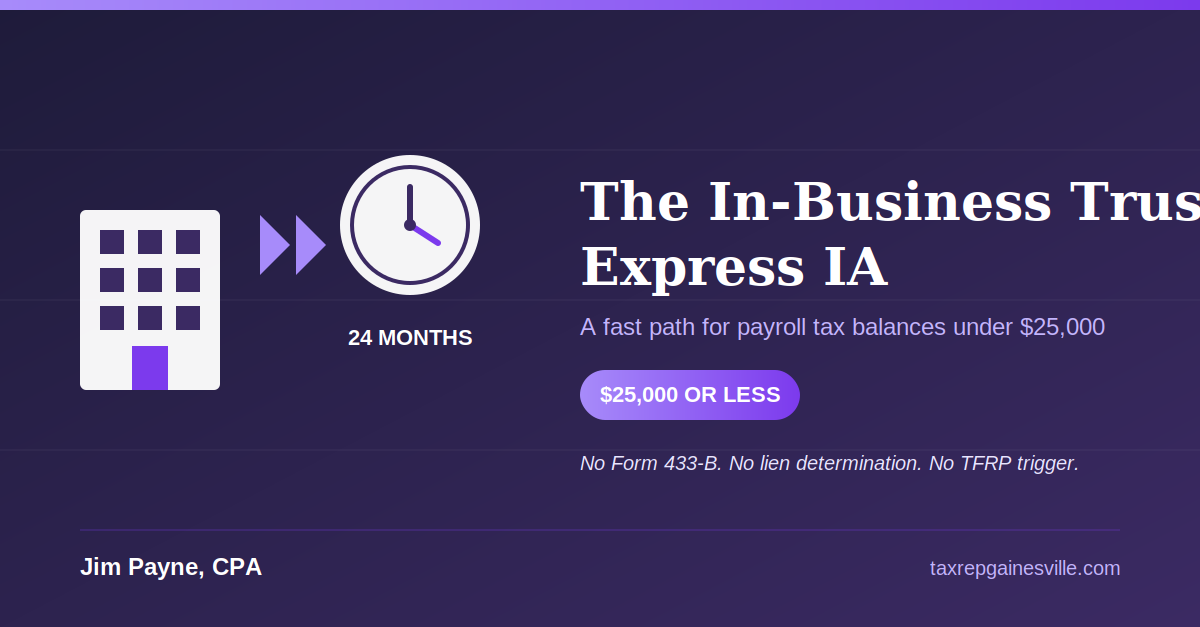
The In-Business Trust Fund Express Installment Agreement: A Fast Path for Small Payroll Tax Balances