Why the Worst IRS Strategy Is Doing Something Just to Feel Progress
This is a subtitle for your new post

When someone is dealing with IRS debt, inaction feels unbearable. The notices keep coming. The balance grows. Anxiety builds. At some point, many people decide that doing anything must be better than doing nothing.
That instinct is understandable—but it’s also the source of some of the worst IRS outcomes.
Motion Is Not the Same as Strategy
One of the most common mistakes I see is taking action for emotional relief rather than for strategic value. People rush to set up payment plans they haven’t analyzed. They make small payments, hoping it will “show good faith.” They file partial or rushed returns just to feel caught up. Each of these actions creates the feeling of progress.
None of them necessarily improves the case.
The IRS doesn’t reward motion. It responds to compliance, timing, and numbers. Action taken out of sequence often locks a case into a position that’s harder to fix later.
Why Payment Plans Are Often Chosen Too Early
Payment plans are the classic example. They feel responsible. They stop collection notices. They give structure. But without a financial analysis, a payment plan may be unsustainable, unnecessary, or counterproductive.
Once a plan is in place, leverage changes. In some situations, other options become harder to pursue. When a poorly chosen plan defaults, the case often comes back worse than before.
What felt like progress was actually delay.
Small Payments Can Create Big Problems
Another common move is making voluntary payments without a plan. People assume that paying “something” will help. In reality, small payments often make no difference. They don’t stop enforcement, don’t establish resolution, and don’t improve eligibility for options. In some cases, they reduce cash that would have been better preserved for strategy.
The IRS doesn’t evaluate intent. It evaluates results.
Filing Without Preparation Has Consequences
Rushed filing can also be a form of false progress. Filing returns without reconciling income or understanding how they affect enforcement timing can create audit issues, mismatches, or new liabilities. Fixing those mistakes later is far more difficult than taking the time to file correctly.
Again, the feeling of progress masks real risk.
Real Progress Feels Slower
Actual IRS strategy often feels uncomfortable because it requires restraint. It means pausing to analyze finances before choosing an option. It means filing extensions instead of rushing. It means letting the numbers settle before acting. That can feel like doing nothing, even when it’s the smartest move.
The people who get the best outcomes aren’t the ones who move fastest. They’re the ones who move deliberately.
When dealing with IRS debt, progress isn’t measured by activity. It’s measured by whether each step improves your position.
Doing something just to feel better may ease anxiety—but it rarely improves the outcome.

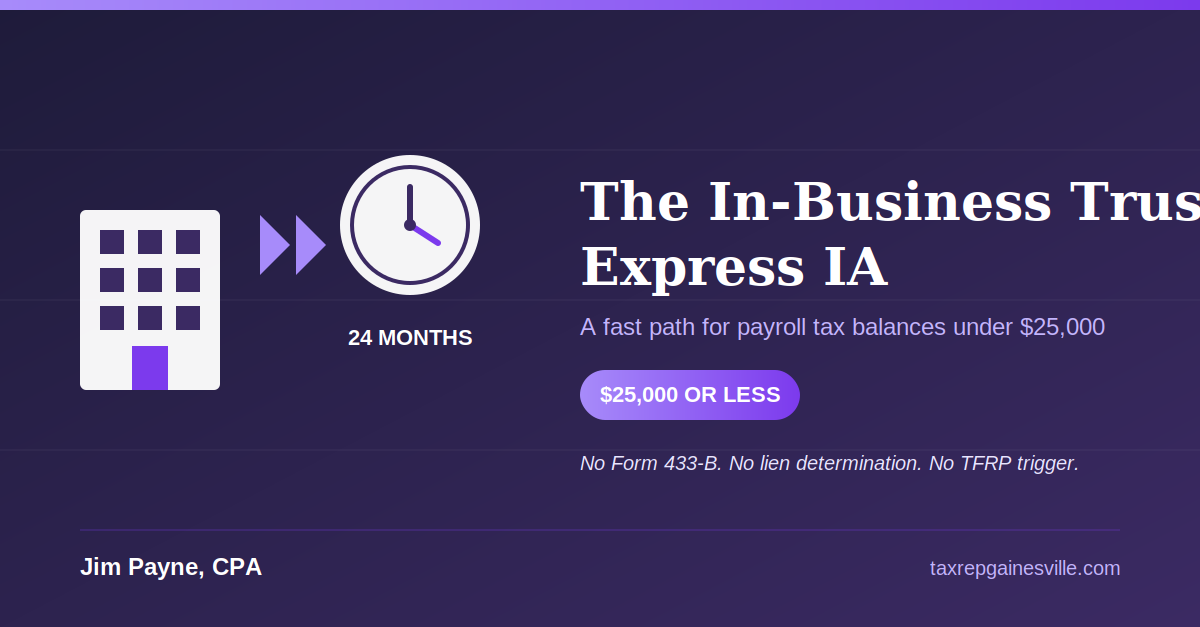
The In-Business Trust Fund Express Installment Agreement: A Fast Path for Small Payroll Tax Balances