The IRS Assigns Cases Based on Balance Size, but Resolves Them Based on Collectability
This is a subtitle for your new post

When people first face IRS debt, they often think that the size of their balance is the most important factor. It makes sense: after all, a $100,000 debt seems much more serious than a $10,000 one.
But here’s the reality:
The IRS assigns cases based on balance size, but resolves them based on collectability.
Why Balance Size Doesn’t Tell the Whole Story
At the institutional level, the IRS cares about dollar volume. They track how much is owed, how much is collected, and how quickly they can resolve cases. Large balances tend to receive more attention from the system and may be more likely to be assigned to a Revenue Officer for follow-up. However, that’s not the same as saying the IRS is focused on collecting the full amount from every taxpayer, regardless of the balance.
In fact, it’s much more about what the IRS believes it can realistically collect.
How the IRS Decides What It Can Collect
When a case is under review, the IRS doesn’t simply look at how much is owed. It evaluates reasonable collection potential (RCP), which is determined by financial factors such as:
- Income: What is the taxpayer earning, and can they afford to pay over time?
- Assets: Does the taxpayer have assets that can be liquidated or used to pay down the debt?
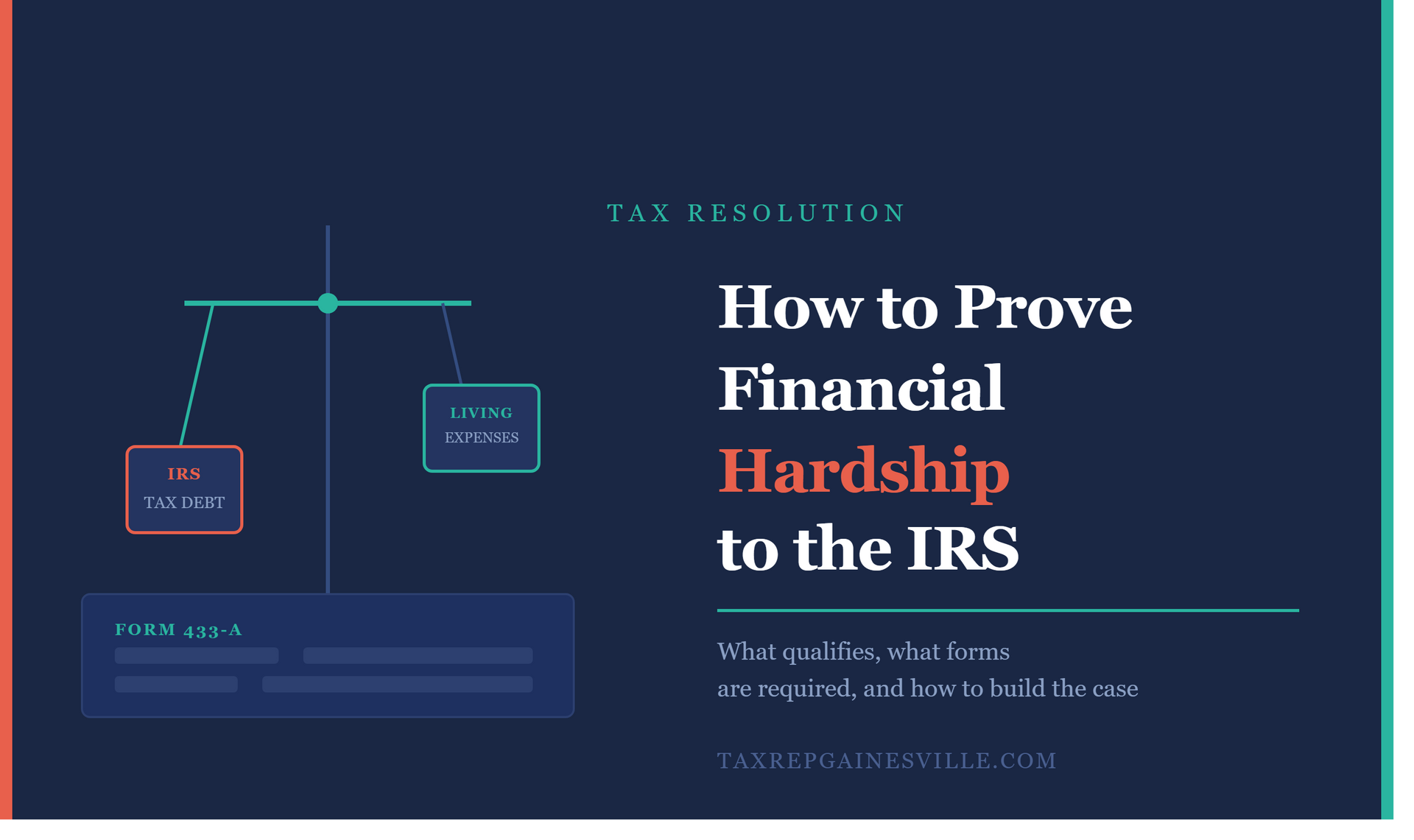
- Living expenses: What are the necessary living expenses, and how do they affect the ability to pay?
- Cash flow: Does the taxpayer have consistent income that can be applied to monthly payments?
In short, the IRS isn’t always focused on the size of the debt—it’s focused on what it can collect based on your ability to pay, given your financial situation.
Why This Matters
This approach means that two taxpayers owing the same amount may have completely different outcomes based on their individual financial circumstances. For example:
- Taxpayer 1 owes $100,000 but has a stable, high-paying job, substantial savings, and a home with equity. The IRS will likely seek a payment plan or even a levy to recover the debt over time.
- Taxpayer 2 owes the same amount, but has minimal income, no significant assets, and large living expenses. In this case, the IRS may accept a settlement (like an Offer in Compromise) or place the case into currently not collectible status, where collection efforts are temporarily suspended.
The IRS wants to maximize its collections, but it also knows it can’t extract money from people who don’t have it. That’s why collectability becomes the deciding factor in how cases are resolved.
What This Means for Your IRS Strategy
Understanding this distinction is critical to your IRS strategy.
- Balance size doesn’t equal collection aggressiveness—your financial situation does.
- Financial analysis should come first before determining what resolution options are possible.
- Installment agreements and Offers in Compromise depend on your collectability, not just the amount owed.
If you’re considering resolution options, it’s important to assess your full financial picture, not just focus on how large the balance is. Whether you’re aiming for a payment plan, a settlement, or a hardship designation, knowing what the IRS can realistically collect from you is the key to shaping your approach.

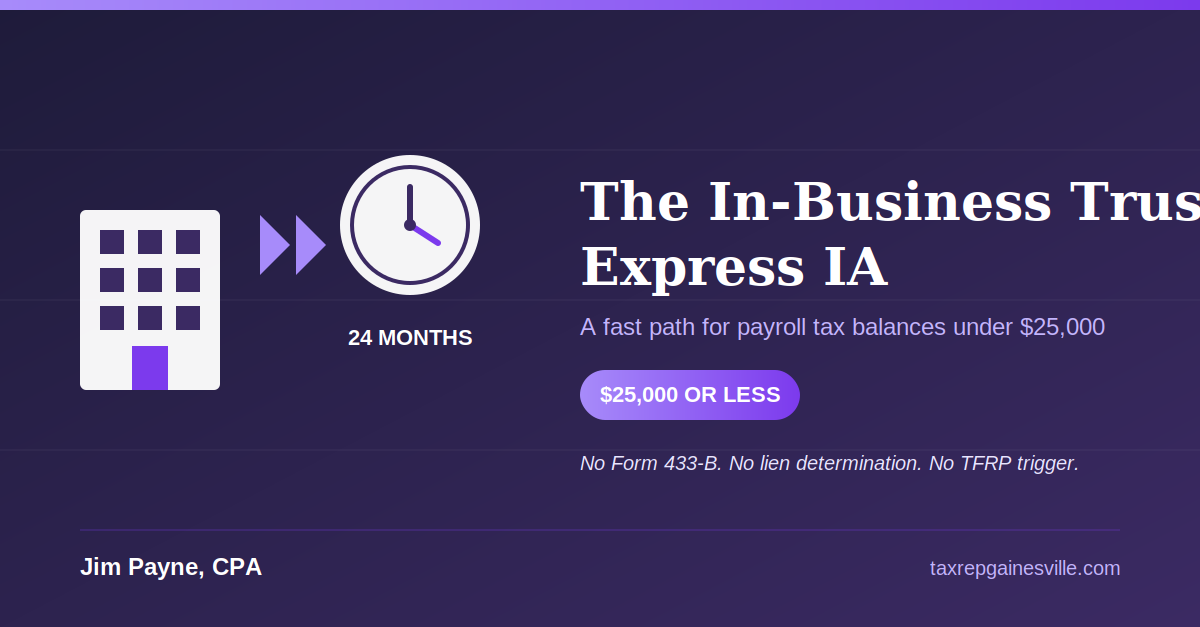
The In-Business Trust Fund Express Installment Agreement: A Fast Path for Small Payroll Tax Balances