When an IRS Installment Agreement Makes Sense—and When It Doesn’t
This is a subtitle for your new post

For many people dealing with IRS debt, an installment agreement feels like the obvious next step.
It stops collection activity, sets a monthly payment, and creates the sense that the problem is finally under control. In some situations, that’s exactly what an installment agreement is meant to do.
In others, it’s the wrong move at the wrong time.
When an Installment Agreement Makes Sense
An IRS installment agreement can be appropriate when the tax returns are filed, the balance is clearly defined, and the payment amount is realistically sustainable.
If income is stable, expenses are predictable, and there is enough cash flow to make payments without creating new tax problems, a payment plan can be an effective way to manage the debt over time. In these cases, the agreement does what it’s supposed to do: it keeps the IRS from escalating enforcement while the balance is paid down.
Installment agreements also make sense when there are no better alternatives available. Not every situation qualifies for hardship status or settlement, and sometimes spreading payments over time is the most practical option.
When a Payment Plan Is the Wrong First Move
The problems begin when installment agreements are used reflexively rather than strategically.
A payment plan does not fix filing issues, underlying cash flow problems, or structural business losses. If those issues persist, the agreement often fails—not because the IRS was unreasonable, but because the numbers never worked.
Another common mistake is setting up a payment plan before fully understanding the financial picture. People agree to payments that look manageable in the moment but leave no margin for normal life events. When income fluctuates or expenses rise, the plan becomes fragile.
In other cases, entering into a payment plan too early can limit options. Certain strategies depend on timing, compliance status, and enforcement posture. Locking into an installment agreement before evaluating those factors can quietly remove flexibility.
Installment Agreements Are Not Set-and-Forget
Even well-structured installment agreements require attention.
Future tax returns must be filed on time, and new taxes must be paid in full. One missed filing or unpaid balance can default the agreement. If financial circumstances change, the plan may need to be renegotiated—but that requires action before a payment is missed.
An installment agreement is not a finish line. It’s an ongoing arrangement that only works if the underlying assumptions stay true.
The Role of Analysis Before Deciding
Whether an installment agreement makes sense depends on facts, not labels.
Income, expenses, assets, cash flow, and timing all matter. Without reviewing those elements together, it’s impossible to know whether a payment plan is a solution or just temporary relief.
Installment agreements can be useful tools—but only when they’re chosen deliberately. When they’re used automatically, they often create new problems instead of solving the original one.
The right question isn’t “Can I get a payment plan?” It’s “Does a payment plan fit my situation right now?”
Answering that requires analysis before action.

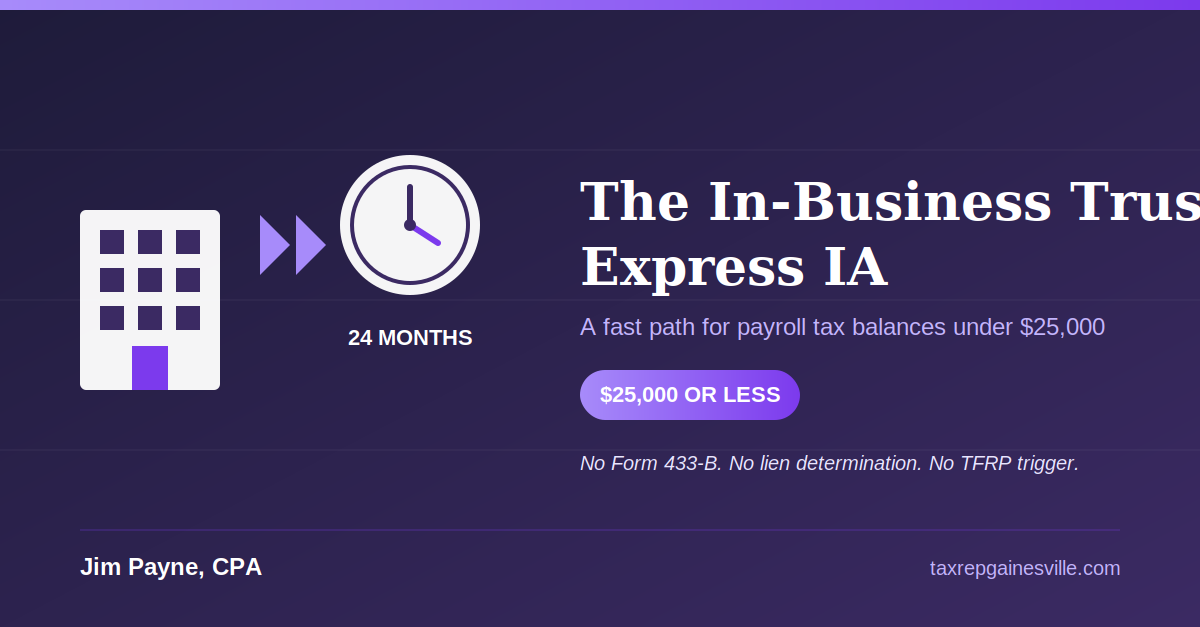
The In-Business Trust Fund Express Installment Agreement: A Fast Path for Small Payroll Tax Balances