What Happens When an IRS Installment Agreement Defaults
This is a subtitle for your new post

An IRS installment agreement often feels like stability.
Payments are scheduled. Enforcement pauses. For many people, that sense of order brings real relief. But when an installment agreement defaults, the situation can unravel quickly.
Understanding what actually happens after default explains why payment plans need to be chosen carefully—and monitored closely.
Default Is Usually About Compliance, Not One Missed Payment
Most installment agreements don’t fail because someone forgets to pay.
They fail because a required return isn’t filed, a new balance comes due, or financial circumstances change, and the payment no longer fits. Even a single missed filing or an unpaid balance can terminate an agreement, regardless of prior payment history.
From the IRS’s perspective, an installment agreement only works as long as compliance continues.
Most Installment Agreements Don’t Last Their Full Term
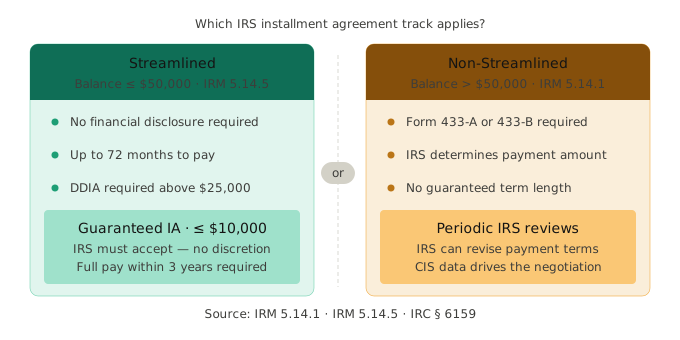
Most individual installment agreements are structured to run for several years, often up to 72 months for common streamlined plans. In theory, that allows the balance to be paid before the collection statute expires.
In practice, many never get there. Based on IRS Data Book summaries and practitioner analysis of IRS collection data, the majority of IRS installment agreements default before completion. That outcome reflects how often income, expenses, or compliance change over time. The issue is usually sustainability, not intent.
The IRS Resumes Where It Left Off
When an agreement defaults, the IRS doesn’t start over.
The balance remains, along with interest and penalties that continued to accrue during the agreement. Enforcement that was paused can resume, often more quickly than before. In some cases, the IRS now has more financial information, making collection easier.
Default doesn’t erase progress—it changes the posture of the case.
Notices Come First, but the Timeline Shrinks
After default, the IRS issues termination notices. These letters typically carry firmer deadlines and fewer warnings than earlier correspondence.
At this stage, the IRS assumes voluntary compliance has failed. Options narrow, and delays become more costly.
Why Default Often Feels Worse Than the Original Debt
Many people find the default more stressful than the original problem.
The agreement created an expectation of safety. When it collapses, enforcement feels sudden—even though the risk was always there. Often, the plan simply masked deeper issues like unstable income or unresolved filing problems.
Default Changes the Strategy
A defaulted installment agreement doesn’t eliminate all options, but it does change the analysis.
Payments may need to be renegotiated. Financial circumstances may need to be documented. In some cases, restarting the same plan makes less sense than reassessing the entire approach.
What matters is understanding why the agreement failed before deciding what comes next.
Installment agreements are tools, not guarantees. Most defaults aren’t caused by irresponsibility—they’re caused by plans that didn’t match reality or weren’t adjusted when reality changed.
Knowing what happens after default isn’t about fear. It’s about using installment agreements deliberately—and knowing when they need to change.
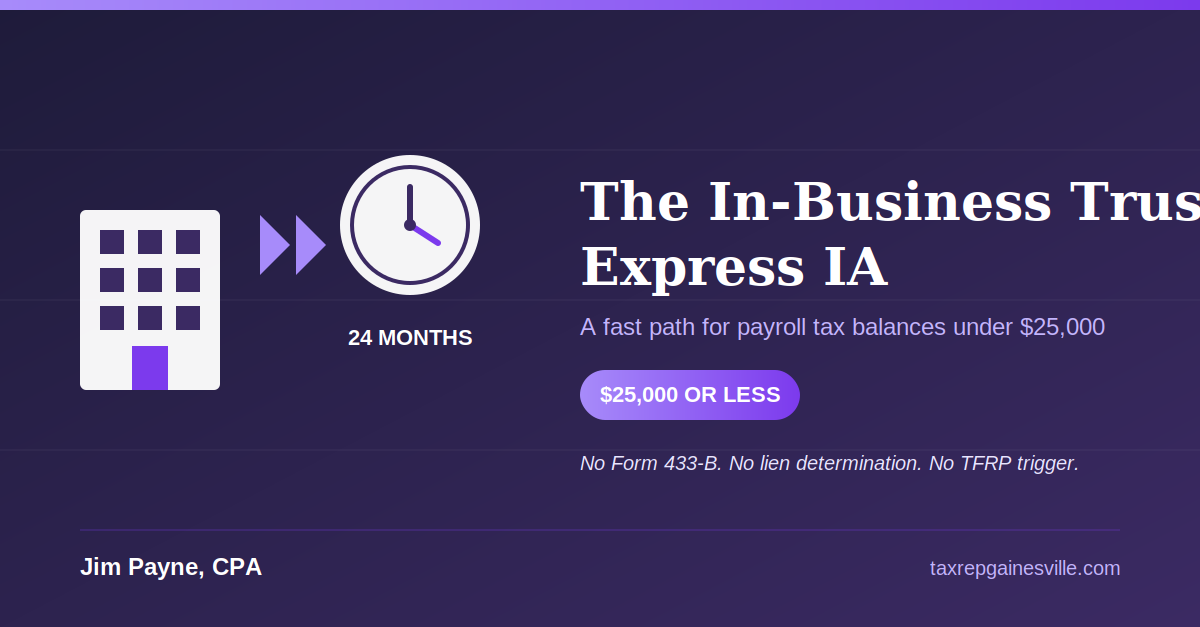
The In-Business Trust Fund Express Installment Agreement: A Fast Path for Small Payroll Tax Balances