What Happens After You File the Missing Returns
This is a subtitle for your new post

For people who have gone years without filing, submitting the missing returns often feels like the moment everything will either collapse—or finally get better.
In reality, filing the returns doesn’t end the problem, but it does change it.
Processing Comes First, Not Enforcement
The first thing that happens after missing returns are filed is administrative, not dramatic. The IRS processes the returns, updates its records, and recalculates the taxpayer’s account. This can take weeks or months, depending on how many years were filed, whether the returns were paper or electronic, and whether any of them trigger additional review.
During this period, silence is common. That silence doesn’t mean nothing is happening. It means the IRS is updating the system.
Non-Filer Enforcement Stops Being the Issue
Once the required returns are on file, the IRS can no longer treat the case as a failure-to-file problem. That matters because many enforcement actions are driven by noncompliance rather than unpaid balances.
Filing moves the case from “non-filer” to “owing,” which is a very different category in the IRS system.
The Numbers Settle After Filing
If the IRS previously prepared substitute returns, those inflated assessments are replaced by the filed returns. In many cases, balances decrease—not because of relief, but because real deductions and credits are finally reflected. In other cases, the balance becomes clearer, even if it doesn’t get smaller.
Clarity is progress.
Transcripts Update and Strategy Becomes Possible
After the returns are processed, IRS transcripts update. This is when accurate balances, assessment dates, and compliance status become visible. Only at this point does it make sense to evaluate resolution options. Before then, any strategy is guesswork.
Filing Does Not Trigger Immediate Collection
Filing missing returns does not automatically trigger levies or seizures. In many cases, filing actually slows enforcement because the IRS must reassess the account before taking further action. That said, filing alone does not stop collections permanently if no plan follows.
Filing Is a Prerequisite, Not a Resolution
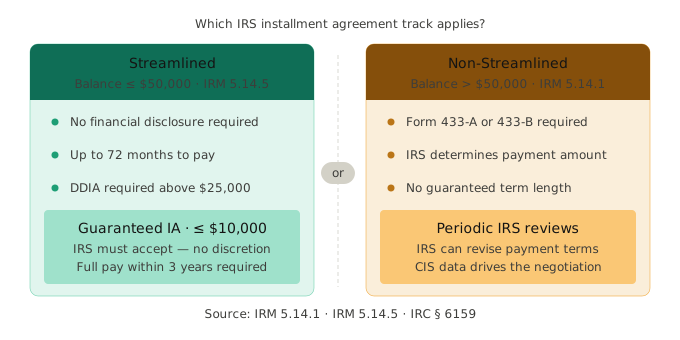
This is where many people get confused. Filing is not relief. It does not create a payment plan or eliminate a balance. It simply opens the door to options like installment agreements, hardship status, or an Offer in Compromise.
Control Is the Real Change
Before filing, the IRS controls the narrative. It estimates income, defines the balance, and enforces compliance. After filing, the facts are on record, the liability is defined, and decisions can be made deliberately instead of reactively.
Filing missing returns doesn’t solve everything—but it changes everything that comes next.


The In-Business Trust Fund Express Installment Agreement: A Fast Path for Small Payroll Tax Balances