What to Do When You Can’t Make Your Payroll Tax Deposits
This is a subtitle for your new post

Few situations create more stress for a business owner than realizing the payroll tax deposit isn’t going to happen. Payroll taxes follow strict deposit schedules, and when cash flow gets tight, owners often feel tempted to “borrow” from withheld taxes just to keep operations going.
But payroll tax problems aren’t just another bill—they trigger some of the harshest enforcement actions in IRS Collections. If you can’t make your payroll tax deposits, taking the right steps now can prevent the situation from escalating into liens, levies, or personal liability.
1. You Need a New Plan
If the business can’t fund current payroll taxes, the most important thing you can do is change the pattern immediately. Continuing to operate while building new payroll tax debt is the single fastest way to end up with a Revenue Officer at your door—and in extreme cases, the IRS would rather see the business shut down than continue accruing trust fund liability.
A new plan may include:
- Adjusting payroll timing
- Cutting hours or staff
- Change your pricing strategy
- Reducing nonessential expenses
- Pausing operations temporarily
- Moving to a full-funding payroll service (to prevent missed deposits)
The IRS viewpoint is simple: if you can’t stay current, something must change. They expect you to fix the cause before they’ll discuss resolving old liabilities.
2. File Your Payroll Tax Returns Even If You Can’t Pay
Never skip filing Form 941. Filing protects you from severe failure-to-file penalties and positions you to deal with the IRS collections process sooner. Filing late—or not at all—signals deeper compliance problems and increases scrutiny.
3. Contact the IRS Before They Contact You
If you anticipate missing deposits, proactive communication helps. Reaching out early shows good faith and can sometimes prevent escalation.
If the case is still handled by ACS, you may be able to:
- Negotiate a payment plan
- Request a brief extension
- Show that you’re correcting the issue
If the case reaches a Revenue Officer, they will require full compliance on current deposits before negotiating any past amounts.
4. Prepare to Explain How the Business Will Stay Current Going Forward
The IRS wants evidence that the business is viable without using withheld payroll taxes to float operations. You should be prepared to show:
- Updated cash flow
- Cost-cutting steps
- Proof of timely future deposits
- A plan to address back taxes
A credible forward plan is often the difference between cooperation and rapid enforcement.
Final Thoughts
When you can’t make your payroll tax deposits, the worst thing you can do is ignore the issue. The first step is to adopt a new, sustainable plan to stop the liability from growing. From there, stay current on filings, communicate early, and demonstrate to the IRS that the business can move forward in compliance. Early correction preserves options—waiting narrows them quickly.

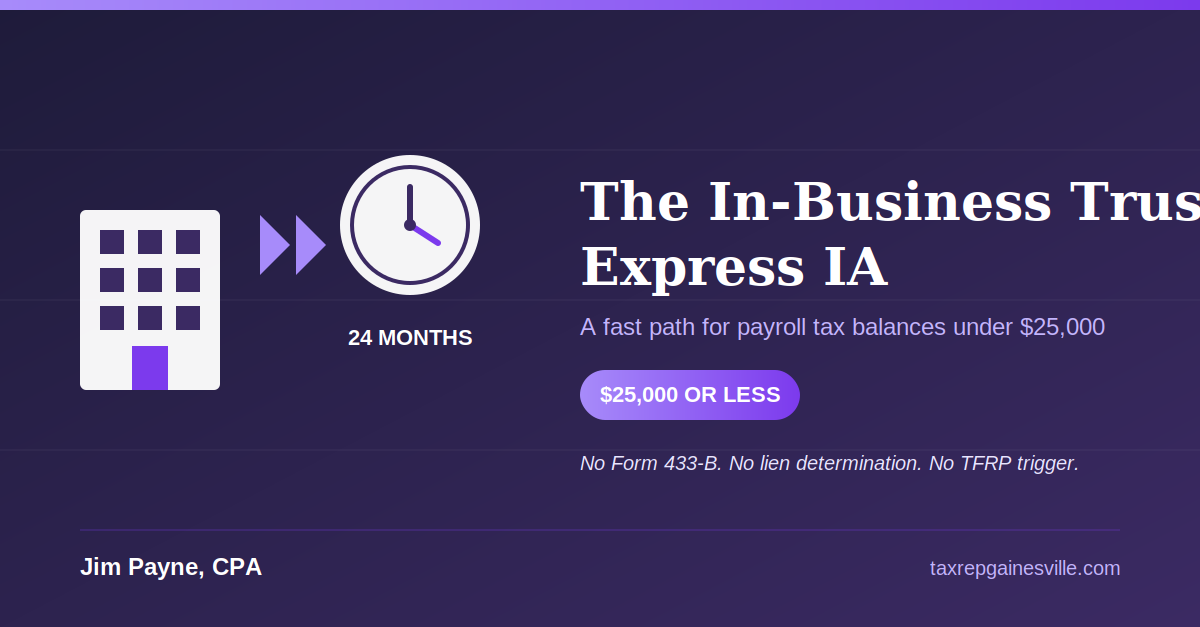
The In-Business Trust Fund Express Installment Agreement: A Fast Path for Small Payroll Tax Balances