Effective Tax Administration (ETA) Offers in Compromise: How They Work and When They Apply
This is a subtitle for your new post

Most Offers in Compromise fall into two categories: Doubt as to Collectibility (DATC) or Doubt as to Liability (DATL). But there’s a third, rarely used option — the Effective Tax Administration (ETA) Offer in Compromise.
ETA OICs are designed for unusual situations where the taxpayer can pay the liability, but collecting it would either cause economic hardship or result in an unfair or inequitable outcome. These cases fall under IRM 5.8.11 and make up only a tiny portion of accepted OICs each year.
What Is an ETA OIC?
An ETA OIC allows the IRS to compromise a tax debt that is correct and fully collectible when exceptional circumstances justify relief. There are two types:
- Economic Hardship ETA – When collection would cause hardship as defined under levy hardship rules (IRC §301.6343-1) and as outlined in IRM 5.8.11.2.
- Public Policy/Equity ETA – When collection would be unfair or undermine confidence in the tax system, detailed in IRM 5.8.11.3.
These OICs require compelling, well-supported facts — far beyond normal financial difficulty.
When ETA Applies: Economic Hardship Situations
Guidance in IRM 5.8.11.2 provides examples where a taxpayer could technically pay, but doing so would prevent them from meeting basic living expenses:
- An elderly taxpayer with home equity but limited income, where liquidation would jeopardize housing or necessary living expenses.
- A taxpayer with a serious medical condition, where paying the tax would interfere with necessary treatment or long-term care.
These reflect narrow, levy-hardship-level circumstances — not general financial strain.
When ETA Applies: Public Policy or Equity Situations
Under IRM 5.8.11.3, public policy ETA applies even without hardship when fairness requires compromise. Examples include:
- A situation where an IRS error contributed to the liability, but the facts don’t meet Doubt as to Liability standards.
- A taxpayer who relied on written IRS advice in good faith, which later proved incorrect.
Here, a full collection would be legally permissible but inequitable.
Why ETA OICs Are Rare
ETA OICs account for well under 2% of accepted offers. Reasons include:
- Extremely narrow eligibility standards
- Strong preference for DATC when taxpayers can't afford full payment
- The need for exceptional facts involving hardship or fairness
- High level of scrutiny during review
ETA exists for cases where rigid enforcement would undermine fairness or sound tax administration.
Final Thoughts
An Effective Tax Administration OIC is a powerful but rarely applicable tool. When supported by the types of circumstances outlined in IRM 5.8.11, it allows the IRS to resolve a liability in a way that avoids hardship or corrects an inequitable result — even when the taxpayer can pay the full amount.
If your situation involves unusual circumstances or fairness concerns that don’t fit DATC or DATL, exploring an ETA OIC may make sense.
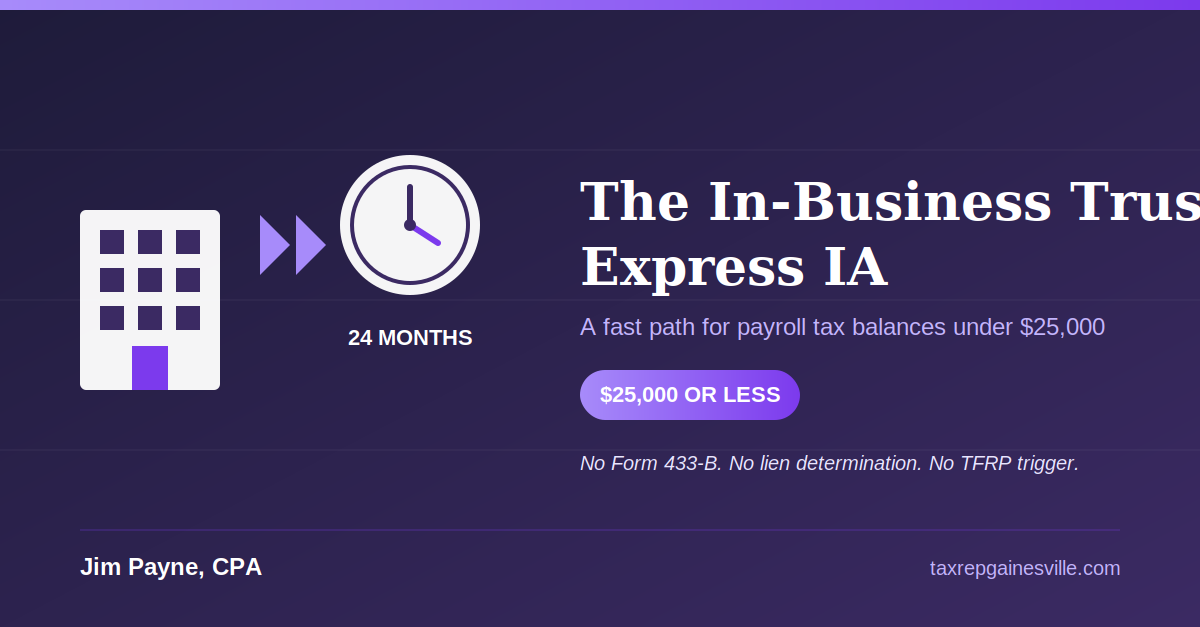
The In-Business Trust Fund Express Installment Agreement: A Fast Path for Small Payroll Tax Balances