What Replaced the IRS Fresh Start Program? | IRS Options Explained
This is a subtitle for your new post

When people learn that the IRS no longer has a Fresh Start program, the next question is usually the same:
So what replaced it?
The short answer is: nothing new.
The longer—and more accurate—answer is that the IRS absorbed most of the Fresh Start features into its regular collection process years ago.
The original Fresh Start initiative, introduced in 2011, wasn’t a standalone system. It was a set of policy changes designed to make certain IRS resolution options more flexible during a difficult economic period. When the initiative ended, those policies didn’t disappear. They simply became part of how the IRS normally handles collection cases.
That’s why people still hear about Fresh Start today—even though the program itself no longer exists.
What remains are the same core IRS resolution tools that have always existed, applied under current rules and enforcement priorities.
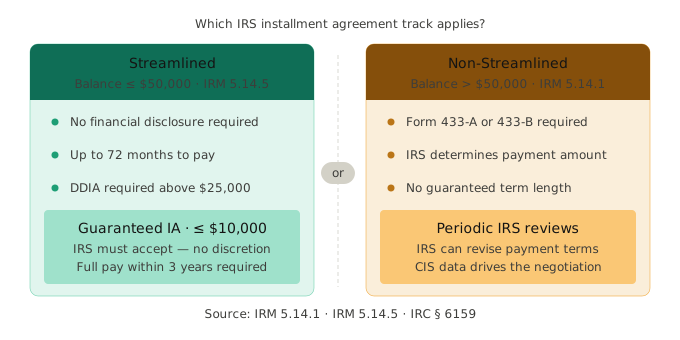
For example, installment agreements are still available, but approval depends on balance size, filing compliance, and the IRS’s view of your ability to pay. Offers in compromise still exist, but they are accepted only when the IRS believes it cannot collect more through other means. Penalty abatement is still possible, but only under specific circumstances that can be documented.
Temporary collection holds may be available for people experiencing financial hardship, but they do not eliminate the debt and are reviewed periodically.
None of these options represent a “fresh start” in the way the phrase is commonly used. They do not reset balances. They do not erase interest. They do not stop the IRS from enforcing compliance requirements. They are tools the IRS uses to collect what it reasonably can, given the facts of a particular case.
This is where confusion becomes costly.
Many people delay taking action because they believe they are waiting for approval under a special program. Meanwhile, required returns remain unfiled, balances grow, and enforcement continues. By the time reality sets in, fewer options are available and the problem is more expensive to resolve.
In practice, resolving IRS debt today looks much the same as it did before Fresh Start was ever announced. It starts with getting current on filings, correcting inflated assessments caused by IRS-prepared substitute returns, and evaluating which standard resolution option fits the taxpayer’s actual financial situation.
There is no replacement program because none is needed. The IRS already has the tools it intends to use.
The real question isn’t what replaced the Fresh Start program—it’s which existing IRS options apply to your situation, and how quickly the window to use them is closing.
If you’re dealing with IRS debt or collection activity and want clarity about your real options—not
marketing terms—a short consultation can help you understand where you stand and what steps make sense next.
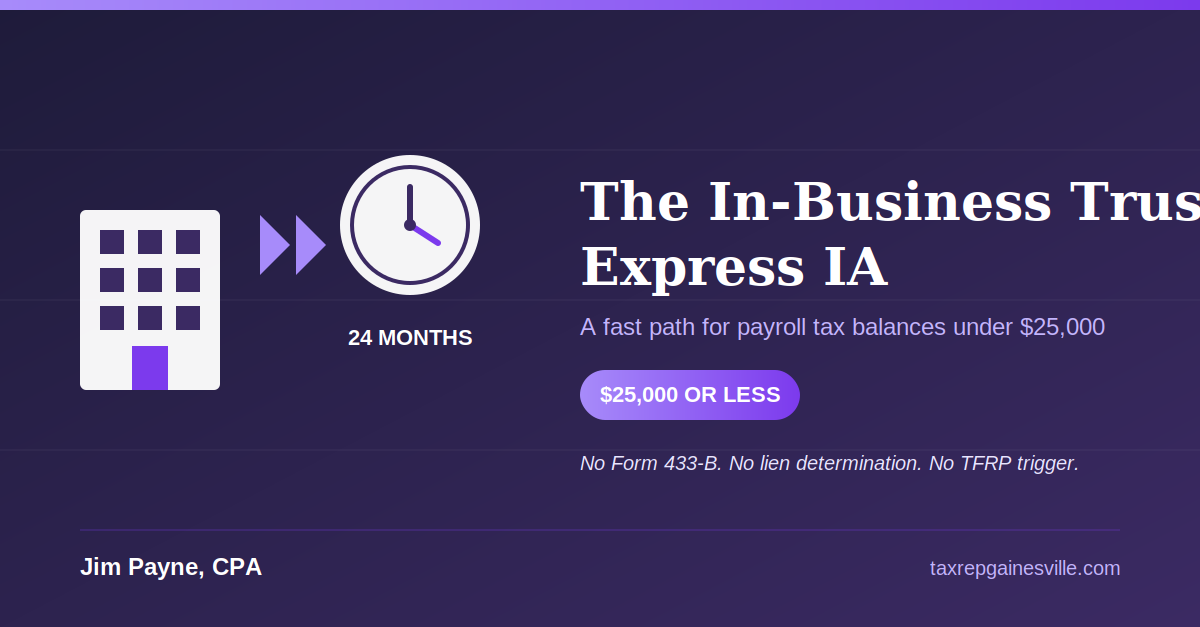
The In-Business Trust Fund Express Installment Agreement: A Fast Path for Small Payroll Tax Balances